Sunday, 7 July 2013

Three MONKS but no WATER !!


Sometimes ‘small can be beautiful’. A small video which titles as ‘Three Monks’- a Chinese animated film made me learn so many wonderful aspects of management. To those who have not watched it, can watch it here.

Or can watch it here :


Plot in Brief:
A young monk lived a harmonious life in a monastery situated on a hill top. He used to bring two buckets of water from a river downhill. A second monk joined the monastery, the first monk was happy that he got someone to do the job of bringing water. But soon, he had to share the responsibility and they brought a water together using a large stick. When the third monk joined the monastery, the two monks threw the responsibility on him to bring the water. Soon, the third monk gave up and there was no water. One night the monastery caught fire and there was no water to extinguish it. They made a united effort to put out the fire. After this the monks realized the importance and started working together to bring water.

The movie has won some outstanding awards and recognition too:

  • Won the outstanding film award at China's Ministry of Culture.
  • Won the Best animated film prize at the first Golden Rooster Awards in 1981.
  • Won four international awards including a Silver Bear for Short Film at the 32nd Berlin Film Festival in 1982.


My Understanding and Analysis:
At one point of time the two monks can be seen carrying a bucket of water on their shoulders using a long stick. And they can be seen trying to push the load onto the other person. This is very common in organisations that generally people want others to do their jobs too and don’t want to share responsibilities. The ideal system with bucket at the centre teaches about the importance of sharing burden and responsibilities in a team, which according to me is IDEAL TEAM WORK.

As Team Work helps in reducing the inputs/efforts, the productivity can be increased.

BUT as this video also shows that METHOD should also be accordingly modified. While two monks could share the load at the center.The same method could not be used when the third monk came in. And towards the last video shows how the monks wonderfully shared the responsibility using an innovative method.

SO METHODS NEED TO BE WORKED UPON TOO.

A simple analysis to study the productivity and efforts of monks in all the three methods shown in the video:

METHOD 1
METHOD 2
METHOD 3
No of monks
1
2
3
Dependency
Low
medium
High
Effort
High
Moderate
Low
Efficiency or productivity
Low
Moderate
High


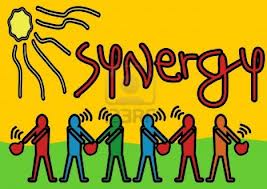
Moreover, after giving a thought over the fire-fighting scene, I realized that often in organisations (and in general life too) we tend to take reactive actions and not proactive. If the monks had realized this early the chances of fire could be minimized  So the team members understand their roles and responsibilities well and try to synergise their efforts.


Whenever people cooperate to achieve a common goal, the Chinese say :-  
                "Great Things can be achieved by working together"

Sunday, 30 June 2013

Learning the art of GOAL Setting and Achievement


Objective: Learning the way of setting SMART Goals and their achievement

Dr. Mandi always has a very innovative way of teaching concepts and ideas, and I always find them to be with such an approach that the idea strikes directly into the mind, no need to go deep into the books to understand better. Today again he started in his own way. He wanted to make us understand the importance of setting right goals and their achievement. He gave us cubic blocks of wood and students were asked to build a tower with certain set of conditions- single cube base, no support can be used at any point of time. A student was asked to come and build a tower. The part I loved here that the there was an open bidding process for building it, and a student paid Rs 500 to be there ( the tune of socho socho – beecho beecho rang into my head - a total business approach J). With an objective of around 15 blocks in mind he was able to make a tower with 16 blocks which I considered a good performance.
Continuing on this Mr. Mandi gave us an approach which I will remember throughout my life now. I always thought that goals should be “realistic”, but after his class I realised that goals can only be Low/ Average/ Tough. What is low for one person may be very tough for another person. It all depends on the difference in confidence of a person.
So points to remember while goal setting is that-
·         ALWAYS SET HIGH GOALS; AVOID SETTING AVERAGE/LOW GOALS
·         STEPS SHOULD BE TAKEN TO MAKE TOUGH GOALS TO AVERAGE/LOW OR WHAT YOU SAY POSSIBLE
Goal Achievement should be planned after thinking about how to make goals ‘realistic’.
Here the concept of JUGAAD- Indian innovation, can come to help us and we Indians are considered really excellent in this.  
Goal Setting and Achievement can be better understood with the help of the following diagram—
A= Goal Set
B= Potential
C= Goal Achieved
D= History


So here I should also talk about a new concept I learned which is 
Pygmalion Effect’ or ‘Rosenthal Effect’-
low expectations lead to a decrease in performance.
We understood this better when we did this task after understanding the above concept.  With a new set of Goals, a target of 40 blocks ,the team was not only able to break the previously achieved record of 27 but was able to build a tower of 28 blocks.

  Goals achieved are meant to lesser than or equal to the Goals set.
        
When I was working for my company and saw the APP(Annual Performance Plan) targets, I always considered that the targets were to high based on the historical performance, and I felt that under-achievement of the targets brings low confidence. But now I realised that they were meant this way.

So to summarize –


More to follow soon. Keep learning…. :J

Thursday, 27 June 2013

How to be a desirable Manager

Objectives: To share my learning on motivation and management styles.

Douglas Mcgregor,  an American famous sociologist proposed the famous  
X- Y theory in his book ‘The Human Side Enterprise’. He made the simple yet powerful observation that managerial practice often expresses some very deep assumptions about the nature of human beings: Two competing theories about human nature-
   Theory X which is more conventional which emphasis that workers just don’t love their work and  harnessing the human energy is the management’s role. One key aspect to Theory X management is that   people are the first to blame, not processes

   Theory Y gives its importance to management by objective and maintains human beings are the shapers of their life. ‘Give them water and let them bloom.’ 


For more details on the theory you can read here and here.

So this leads to 4 different cases:-

1 - Theory X Manager assumes LAZY workers as LAZY and makes them work
            When a Theory X Manager assumes LAZY workers as LAZY and uses close supervision, a greater control of behaviour on workers to work, the use of these forces will create counter forces from the side of workers and he may find it hard to achieve desired output, hatred against the management etc. This style of management will take organizations no-where and therefore should be avoided.
 
2 - Theory X Manager assumes NOT LAZY workers as LAZY and makes them work 
            NOT LAZY workers love their work, are self-motivated and want to contribute towards the organisational goals and objectives. When a Theory X Manager assumes NOT LAZY workers as LAZY and makes them work using greater level of control often problems of trust, lack of innovation arise. The objective and targets of an organization may be achieved partially but organization will find it tough to excel.

3 - Theory Y Manager assumes LAZY workers as NOT LAZY and makes them work 
            When a Theory Y manager assumes LAZY workers as NOT LAZY and makes them work, he should use the tools of proper direction, delegation of jobs and should create a better culture of opportunities and growth with proper guidance among the workers, which in turn will motivate workers to shred the lazy attitude they posses and may take organization to higher levels. The managers need to use the power of conviction and be a true leader.

4 - Theory Y Manager assumes NOT LAZY workers as NOT LAZY and makes them work 
                        This is real WIN-WIN situation for any organization as the culture is very positive and achievement of organizations goals and vision is easier as the alignment of the two forces is in the same direction.  

My Understanding and experiences:

'You can't command people to do their best; they can only command that of themselves'- Bob Nelson


The human behaviour in an organization is approximately what management perceives it to be and is considered tough to manage. It is how they generally behave and this behaviour is not a consequence of man’s inherent nature. It rather depends on a no. of factors like the nature of organization, their management philosophy, policy, and practices. My experiences in my company gave some insight into it- some workers were perceived by the management as lazy and lacking ambition and therefore managerial approach emphasised total control even though their behaviour was affected because of tougher working conditions and lack of incentives in the industry. So managers need to be more open in their approach and should primarily try of creating opportunities, releasing potential, removing obstacles, encouraging growth, providing guidance. My experience with my manager taught me that if we create such a culture even a person from whom we expect zero contribution gives his level best and definitely plays his part in the job. But there will be some conditions and cases where you have to lead in theory X style because in industry people are accustomed to proper direction, strict guidance and greater control.

So, the key to being an effective manager is not to cling to one style over another in all situations but to learn to analyze a situation and adapt your style of management accordingly.


Liked the Post?  Do give your feedback and comments.